Most people who write about Iceland's Ring Road tell you the same thing: it's 1,332 km of asphalt, seven days minimum, book your car early. All true. None of it tells you what it actually feels like to wake up in a guesthouse in Varmahlíð with fog so thick you can't see the car ten metres away, or why I once spent 40 minutes at a single-lane bridge near Breiðdalsvík waiting for sheep that had no intention of moving.
The Ring Road — Route 1 — circles the island in a way that feels almost engineered by someone with a grudge against your schedule. It's not hard driving. It's relentless driving. That distinction matters more than any itinerary you'll find elsewhere, and it's the thing I wish someone had told me before my first loop in 2021.
Key Takeaways
- Route 1 covers 1,332 km and closes a full loop — you end where you started
- Seven days is the honest minimum; ten to fourteen is where the road actually becomes enjoyable
- No 4x4 needed for Route 1 itself in summer, but gravel protection insurance is non-negotiable
- Fuel stations thin out dramatically in the East Fjords — never pass one below half a tank
- Accommodation in the high season (June–August) sells out months ahead on the eastern and northern stretches
- Winter driving is possible but demands daily checks of road conditions, not a fixed plan
The Ring Road isn't a road trip. It's a logistics problem with scenery attached
Here's what nobody tells you in those glossy YouTube videos: the landscape between stops is often monotonous for 60-80 km at a stretch. Then it turns spectacular with no warning. Then monotonous again. Your brain has to recalibrate constantly, and that's exhausting in a way a 300 km day in mainland Europe never is.
I learned this the hard way on day three of my first loop. I'd planned a 420 km push from Höfn to Egilsstaðir, thinking it was a light day. It took eleven hours. Not because of distance — because of eleven unplanned stops at waterfalls, a reindeer sighting, and a detour into a valley that wasn't on my map.
How long does the Ring Road actually take?
Seven days is the absolute floor, and it means 5-6 hours of driving per day with almost no time to actually stand still. Ten days is comfortable. Fourteen days is where you stop counting kilometres and start noticing things.
Sound familiar? Most first-timers overbook. I did too. Cut your planned stops by a third and you'll enjoy the trip twice as much.
Do you need a 4x4 for the Ring Road?
No. Route 1 is fully paved, and any regular car handles it in summer. What you do need is gravel and ash protection on your rental, because the road surface damages vehicles constantly and rental companies will bill you for every chip. I skipped this in 2021 and paid 180 € for a cracked windscreen three days before flying home.
Choosing your itinerary length: 5, 7 or 14 days
A five-day Ring Road trip exists. It's just not a holiday — it's a driving shift with photo breaks. Averaging 270 km per day on Icelandic roads, with weather that can close a mountain pass for six hours, leaves zero margin.
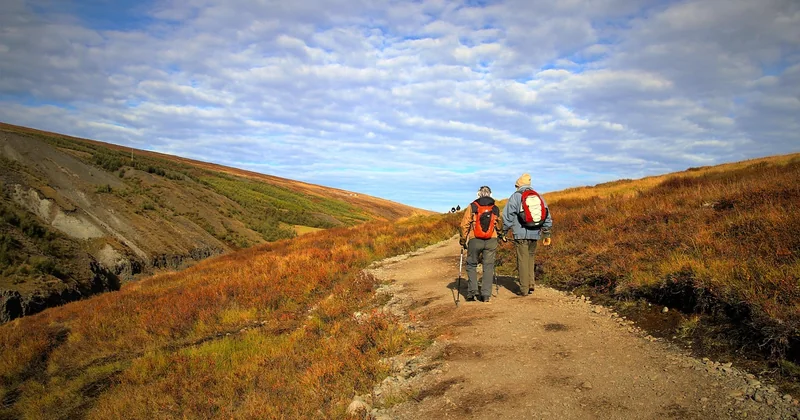
The 5-day version: possible, punishing
You'll spend roughly 40% of your waking hours behind the wheel. You'll skip the Westfjords entirely (they're not on Route 1 anyway), bypass Snæfellsnes, and see the East Fjords through a windscreen. Fine if you're on a hard deadline. Miserable otherwise.
Seven days: the sweet spot for most people
This is the version that appears in every guide, and for good reason. It distributes the driving evenly and leaves room for two or three proper stops per day. My recommendation: Reykjavík → Vík (day 1-2), Vík → Höfn (day 3), Höfn → Egilsstaðir (day 4), Egilsstaðir → Akureyri (day 5), Akureyri → Snæfellsnes (day 6), Snæfellsnes → Reykjavík (day 7).
Fourteen days: the version I'd do again
Two weeks lets you add the Snæfellsnes peninsula properly, spend two nights in the East Fjords, and detour to Dettifoss without watching the clock. It also lets you absorb a weather day without the whole plan collapsing — which happens on roughly one trip in three, in my experience.
| Itinerary | Daily distance | Driving hours/day | Best for |
|---|---|---|---|
| 5 days | ~270 km | 5-6 h | Budget travellers, tight schedules |
| 7 days | ~190 km | 3-4 h | Most first-timers |
| 10 days | ~135 km | 2-3 h | Photographers, slow travel |
| 14 days | ~95 km | 2 h | Anyone who wants to actually see Iceland |
| Bikepacking | 60-80 km | 5-7 h | Cyclists with 3-4 weeks |
On the bikepacking option: a handful of cyclists do the full loop each summer, and it's a completely different trip. Wind is the enemy, not distance. Headwinds in the south can stop you dead for hours, and there are stretches in the highlands approach where the next campsite is 70 km away.
What the Ring Road actually costs in 2026
Nobody gives you real numbers. So here are mine from a fourteen-day trip, plus what I know has changed since.
- Car rental (compact, 14 days, summer): 900-1,400 € depending on how early you book
- Fuel: roughly 350-450 € for the full loop in a small petrol car
- Accommodation: guesthouses and farm stays run 130-220 € per night in high season; campsites are 15-25 € per person
- Food: eating out once a day plus supermarket supplies for the rest, around 60-80 € per day for two people
- Site entry fees (paid parking, geothermal baths, ice caves): 150-300 € total if you're selective
Total for two people, fourteen days, mid-range: somewhere between 5,500 and 7,500 €. That's the honest figure. Anyone quoting less is either camping every night or hasn't done the math on fuel prices, which climbed sharply in the last two years.
Driving rules, hazards and the things that catch visitors out
Icelandic roads punish complacency. Not because they're technically difficult, but because the conditions change faster than your instincts expect.
One-lane bridges: the rule everyone gets wrong
The car closest to the bridge has right of way. That's it. If you're approaching and someone's already on it, you wait. There are signs, but in heavy fog you might not see them until you're committed. I watched a German-registered rental nearly get sideswiped on a bridge in the East Fjords because the driver assumed two lanes.
Fuel stations and phone signal
Between Höfn and Egilsstaðir there are stretches where the next station is over 100 km away. On the northern route, similar gaps. The rule I follow: fill up whenever you pass a station, no matter how full your tank is. It costs nothing extra and saves you a very cold hour.
Phone coverage is decent along Route 1 but drops in valleys and fjords. Download offline maps before you leave Reykjavík. Every time.
Weather checks aren't optional
Check the road authority's site and the safetravel advisory every morning. Not once a week — every morning. I've had a planned mountain pass close for nine hours with no warning, and a friend had to reroute 200 km around a sandstorm in the south. Wind gusts in Iceland regularly hit 25-30 m/s, and that's enough to blow a car door off its hinges.
When to drive the Ring Road — and when not to
Summer (June-August) gives you 20+ hours of usable daylight, open roads, and full access. It also gives you crowds, high prices, and the most booked-out accommodation of the year.
Shoulder season — May and September — is, in my opinion, the best compromise and I'll defend that position. You get most of the access, half the crowds, and prices that are genuinely lower. The trade-off is unpredictable weather and a few services still closed.
Winter is a different trip entirely. Roads close without notice, daylight runs from around 11 am to 4 pm, and you need studded tyres and real winter driving experience. It's beautiful. It's also genuinely dangerous if you're not prepared, and the rental insurance you need is more expensive than the car itself.
Questions I get asked constantly
Which direction should you drive the Ring Road?
Counter-clockwise: Reykjavík south, then east, then north, then back west. Reason? The south coast has the biggest concentration of attractions and the most visitors, so starting there means you hit the famous stops before the tour buses thicken. By the time you reach the north, you're moving against the crowd flow.
Is the Ring Road safe for solo drivers?
Yes, with conditions. Solo driving is common and the roads are well-signed. The risk isn't crime — it's getting stuck somewhere remote with no signal. Always tell someone your route for the day, even a hostel receptionist.
Which rental insurance do you actually need?
Gravel protection (called "sand and ash protection" by some companies) and standard CDW. Skip the extra tyre insurance unless you're going off Route 1. The gravel coverage is the one that will save you — the road surface is rough, and windscreen damage is the single most common claim on Icelandic rentals.
The thing about the Ring Road that stays with you
You won't remember the driving times. You won't remember which guesthouse had the better breakfast. What you'll remember is standing on a gravel pull-off somewhere between Vík and Höfn at two in the morning in June, in daylight, with nobody else for 30 km in either direction, realising that the scale of the place doesn't fit into any itinerary.
That's the part the guides can't give you. The road just puts you in front of it.