You land at Menara Airport around 11 a.m., step outside, and the heat hits you like a wall. Within twenty minutes you're in a taxi negotiating a price you're not sure is fair, and within an hour you're standing in a square watching a snake charmer while a man tries to tie a monkey to your shoulder for a photo you never asked for. Nobody warned you about the monkey.
That first day in Marrakech sets the tone for the whole trip. Get the logistics right and the city opens up like a hand. Get them wrong and you spend three days lost, overcharged, and mildly annoyed. This is the practical guide I wish someone had handed me before my first visit.
Key Takeaways
- Group your sightseeing geographically: medina and Jemaa el-Fnaa on foot, Gueliz and the gardens by taxi.
- Start early. Most monuments open around 9 a.m. and the heat plus crowds peak between 1 and 4 p.m.
- Agree on a taxi fare before you get in, or insist on the meter.
- Carry small cash for entries, tips, and mint tea. Cards work in riads and upscale restaurants, rarely in souks.
- Book the Majorelle Garden online in advance. Walk-up lines are brutal in high season.
- A riad inside the medina wins on atmosphere; a hotel in Gueliz wins on quiet and parking.
What to do first in Marrakech when you only have one day
If you've got a single day, don't try to see everything. You'll fail and you'll be exhausted. The trick is to work with the city's rhythm instead of against it.
Morning: the medina before it wakes up
Arrive at the souks around 8:30 or 9. The metalworkers are opening their shutters, the smell of fresh bread mixes with cedar and cumin, and you can actually walk down an alley without being pressed against a wall. By 11 the same street is a slow-moving river of people, scooters, and handcarts.
Head for Jemaa el-Fnaa while it's still mostly locals. The square transforms completely between day and night, and seeing the quiet version first makes the evening chaos more legible.
Afternoon: palaces and shade
Between 1 and 4 p.m., retreat indoors or into gardens. Bahia Palace and the Saadian Tombs are close enough to combine, and both offer carved plasterwork and cool courtyards that make the heat bearable. The El Badi Palace ruins nearby are mostly open sky, so save those for late afternoon.
Here's a mistake I made early on: I tried to squeeze the Majorelle Garden into the same afternoon. Don't. It sits north of the medina in Gueliz, and the back-and-forth eats two hours in traffic. Do it on a separate half-day.
Evening: Jemaa el-Fnaa, the second act
Return to the square after sunset. The food stalls light up, musicians and storytellers claim their circles, and the whole place turns into something closer to a festival than a public square. Eat at a stall if you're brave, or watch from a rooftop café terrace if you're not. Both are valid.
Marrakech beyond the medina: gardens, Gueliz, and the Atlas
The medina gets all the attention, but roughly half of what's worth seeing sits outside its walls. Skipping it means you only experience the crowded, commercial version of the city.
Majorelle Garden and Menara Gardens
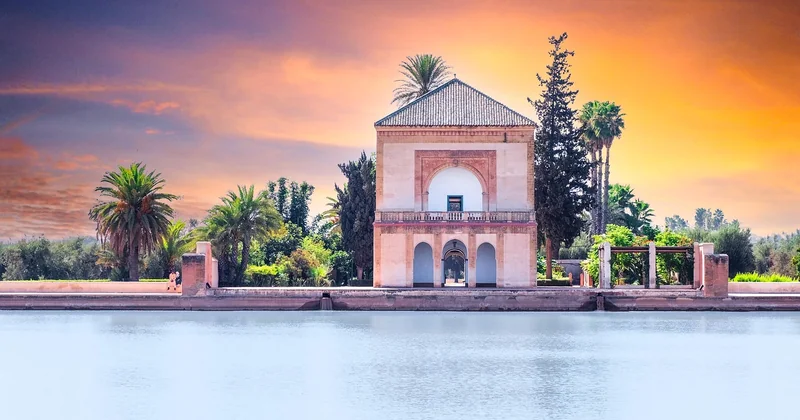
The Majorelle Garden is small, saturated in cobalt blue, and genuinely beautiful, which is exactly why it's mobbed. Book your slot online days ahead. The Menara Gardens, by contrast, are free to enter, mostly locals, and centered on a reflecting pool with the Atlas Mountains behind it. Go at sunset. It's the cheaper, quieter counterpart and, frankly, I preferred it.
Gueliz and the new town
Gueliz is where Marrakech does modern. Concept stores, contemporary art galleries, decent coffee, and restaurants where you won't be handed a menu in five languages. It's a useful reset when the medina starts to feel like a maze with no exit. Twenty minutes by taxi from Jemaa el-Fnaa, or a long walk if you're ambitious.
Day trips worth the drive
The Agafay Desert is under an hour away and offers rocky, lunar scenery rather than sand dunes. Camel rides, quad biking, and dinner under the stars are all on offer. The Atlas Mountains need a full day: leave early, stop in the Ourika or Imlil valleys, and be back by evening. Both are easy to arrange through your riad, usually at a markup you can negotiate.
Practical advice nobody tells first-time visitors
The gap between a stressful trip and a smooth one in Marrakech comes down to about six small habits. None of them cost money.
Getting around without getting fleeced
Petit taxis are the standard way to move around, and the meter is supposed to run. In practice, drivers often quote a flat fare, especially near tourist areas. Agree on the price before you get in. From the airport to the medina, expect a flat rate rather than a metered ride. If a driver refuses the meter, walk to the next one. There's always a next one.
What to wear
Cover shoulders and knees. Not everywhere, not as a rigid rule, but it makes you less conspicuous and more welcome, particularly in residential neighborhoods and around religious sites. Loose linen beats tight cotton in the heat, and a scarf is genuinely useful for sun, dust, and air conditioning.
Money, tips, and the art of bargaining
Carry cash. Souks, small cafés, and taxis run on it. Tipping is expected but modest: a few dirhams for a tea, more for a guide or a driver who actually helped you. In the souks, the first price is an opening bid, not a final one. Counter low, stay friendly, and be willing to walk away. If they let you leave, you've found the real floor.
| Site | Rough entry cost | Time needed | Best time to go |
|---|---|---|---|
| Jemaa el-Fnaa | Free | 1–2 hours | Sunset onward |
| Majorelle Garden | Paid, book ahead | 1 hour | Opening time |
| Bahia Palace | Low paid entry | 1–1.5 hours | Morning |
| Saadian Tombs | Low paid entry | 45 minutes | Morning |
| Menara Gardens | Free | 1 hour | Late afternoon |
| Agafay Desert | Tour-dependent | Half day | Afternoon to evening |
Things to do in Marrakech at night
Nights in Marrakech are the part most first-timers underestimate. The city doesn't wind down; it changes character.
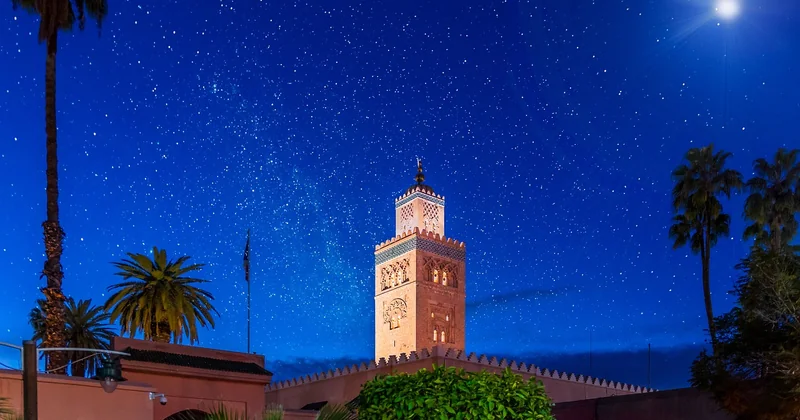
- Rooftop terraces around Jemaa el-Fnaa, where you watch the square from above with a mint tea or something stronger
- The food stalls in the square, best navigated by picking the busiest one
- Live gnawa music in small venues around the medina, often starting late and running past midnight
- Dinner in a riad courtyard, which most visitors never bother to arrange even though it's one of the best meals available
- Gueliz bars and clubs if you want something closer to a European night out
Where to stay: riad or hotel?
A riad is a traditional house built around an interior courtyard, and staying in one is half the experience. They're usually inside the medina, quiet once you're past the door, and often have a rooftop where breakfast is served. The catch is access: many sit down alleys a car can't reach, so you'll walk the last stretch with your luggage. Some riads send someone to meet you. Ask before you book.
Hotels in Gueliz or Hivernage are easier on logistics, have pools, and put you closer to the modern restaurants. If you're traveling with anyone who struggles with stairs or narrow streets, this is the better call.
My honest advice: spend at least two nights in a riad for the atmosphere, and switch to a hotel if you have early departures or a lot of luggage.
The one thing to get right
Marrakech rewards people who slow down. The visitors who have a bad time are almost always the ones trying to tick off ten sites in two days, sprinting between taxis and fighting the heat. The ones who love it tend to pick two things a day, leave room for a long lunch, and let themselves get a little lost in the souks on purpose.
So here's my question for you: if you only had one afternoon in the city, would you spend it hunting for the perfect photo at the Majorelle Garden, or drinking tea on a rooftop while the square below comes alive? Most people answer the second one once they've actually been.