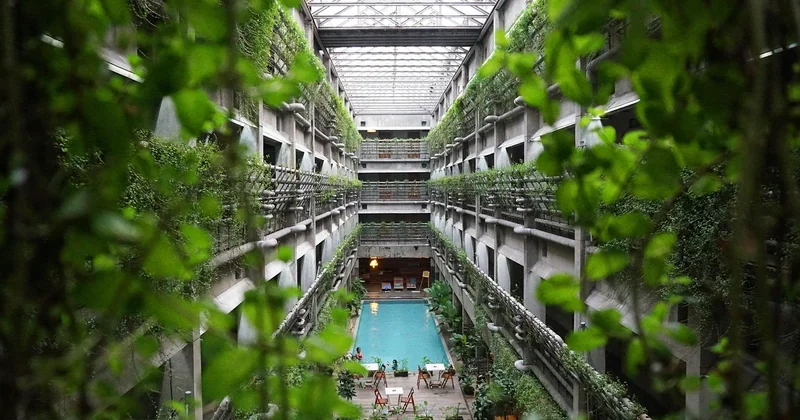
You're standing in the lobby of a hotel in Tulum, and something feels off. The walls are reclaimed wood. The soap is organic. There's a living wall behind reception dripping with ferns. And yet the air conditioning is cranked so high you need a jacket, the infinity pool is steaming in the midday sun, and a staff member just handed you a plastic-wrapped straw for your coconut water. Green marketing, zero substance.
I've walked into that scene more times than I care to admit. Over the past few years of traveling and writing about green hotels and eco-lodges, I've learned that the difference between a genuine sustainable stay and an elaborate photo op comes down to a handful of verifiable signals—most of which have nothing to do with how the lobby looks.
This isn't a list of ten gorgeous properties with bamboo ceilings. It's a guide to telling them apart.
Key Takeaways
- Certifications matter more than aesthetics. Green Key, EarthCheck, and B Corp require third-party audits. A living wall does not.
- Ask for consumption data. A real eco-lodge will know its energy and water use per guest-night. A greenwasher will change the subject.
- Location is the strongest signal. Off-grid properties in fragile ecosystems tend to be genuinely low-impact because they have no choice.
- Beware the "eco" prefix on a luxury chain. Reusable bottles and towel-reuse cards are operational cost-cutting, not environmental strategy.
- Local ownership changes everything. Money that stays in the community behaves differently from money that leaves it.
What actually makes a hotel green—and what doesn't
The first thing to understand is that "eco" has no legal definition in most countries. Anyone can print it on a brochure.
I once stayed at a property in Costa Rica that advertised itself as an eco-lodge. It had no air conditioning (fine, expected), composted its kitchen waste, and grew most of its own produce. It also flew fresh salmon in from Chile twice a week for the restaurant. The owner was genuinely puzzled when I asked about it. He'd never thought of the supply chain as part of the equation.
That's the trap. Sustainability in hospitality isn't a checklist of features. It's a system, and the honest operators will tell you where their system has holes.
The three categories of eco claims
After enough stays, you start sorting claims into buckets whether you mean to or not.
- Operational savings dressed as virtue. Reusing towels, refillable soap dispensers, LED lighting. These cut costs first and emissions second. Not nothing—but not a philosophy.
- Real infrastructure commitments. Solar arrays, greywater recycling, on-site water treatment, no-plastic supply chains. These cost money and are hard to fake because someone had to sign the invoice.
- Structural choices. Building off-grid. Refusing to expand beyond a set number of rooms. Hiring and training locally. Sourcing food within a defined radius. These are the hardest to reverse and therefore the most meaningful.
Most "green hotels" sit in the first bucket. Genuine eco-lodges tend to live in the second and third, often because they were built that way from the start rather than retrofitted.
How to spot greenwashing before you book
You can usually filter out the pretense in about five minutes of research. Here's the process I use.
Check for third-party certification—then check the certification itself
Self-declared sustainability pages are worthless as evidence. Look for a logo from an actual auditing body.
The ones I've found to be reasonably rigorous are Green Key (widely used across Europe and increasingly in the US), EarthCheck (common in Australia, New Zealand, and parts of Asia), and B Corp certification, which is a company-wide assessment rather than a property-level one. Green Globe and LEED for buildings also show up.
The catch? A certification is a floor, not a ceiling. I've seen certified properties that were still running diesel generators around the clock. Ask what the audit actually measured.
Ask the uncomfortable questions
Email the property before you book. Not the booking platform—the property directly. Ask:
- What is your energy mix, and what percentage comes from renewables on-site?
- Where does your water come from, and where does it go?
- What percentage of your staff lives within 20 kilometers?
- How do you handle food waste, and where is your food sourced?
A genuine eco-lodge will answer most of these without hesitation. Some will answer all four with specifics and numbers. A hotel with a green marketing page will send you a generic paragraph about "our commitment to the planet." That non-answer is your answer.
Real talk: I've had properties get defensive when I asked these questions. That tells you plenty.
Eco-lodge vs. green hotel: the real differences
These terms get used interchangeably, but they describe two different models. Understanding the gap helps you pick the right stay for your trip.

| Factor | Eco-lodge | Green hotel |
|---|---|---|
| Typical size | 5–40 rooms | 50–500+ rooms |
| Ownership | Often local or family-run | Usually chain or investment group |
| Energy strategy | Often off-grid or near-off-grid | Grid-connected with efficiency upgrades |
| Food sourcing | Frequently on-site gardens or hyper-local | Mixed; central procurement dominates |
| Certification | B Corp, EarthCheck, or none (small operators) | Green Key, LEED, Green Globe |
| Cost per night | Highly variable—$80 to $800+ | Usually $150 to $600 |
| Community impact | Direct; local employment and procurement | Indirect; corporate CSR programs |
Notice the certification row. Small eco-lodges often have no certification at all because the process is expensive and designed for larger operations. That doesn't make them less sustainable—it just means you have to evaluate them differently, by talking to them and reading reviews that mention the actual experience rather than the marketing.
Do luxury and sustainability actually coexist?
This is the question I get asked most, and my honest answer has shifted over the years.
Luxury and low impact are in tension by definition. A private plunge pool, a spa, a multi-course tasting menu—all of these consume resources. The question isn't whether a resort is zero-impact. It's whether the luxury is being subsidized by the environment or invested back into it.
I stayed at a property in southern Africa where the nightly rate would cover a month of my rent. The lodge ran entirely on solar with battery backup, drew water from a borehole with a strict daily cap, employed 90% of its staff from surrounding villages, and funneled a fixed percentage of revenue into anti-poaching patrols. The safari drives were limited to four vehicles per sighting. That's a property where the high price is doing real work.
Contrast that with a luxury resort I visited in Southeast Asia where the infinity pool was refilled daily and the landscaping required constant irrigation in a region with seasonal water shortages. Same price bracket. Completely different equation.
Luxury eco resorts aren't a contradiction—but the word "luxury" tells you nothing about which kind you're getting.
What to look for in a luxury eco resort
- A published conservation or community fund with disclosed allocations
- Caps on guest numbers, water use, or vehicle traffic
- Staff housing and training programs, not just "local hires"
- Buildings designed for the climate rather than against it (natural ventilation, shade, thermal mass)
- A willingness to say no—to certain activities, to expansion, to a higher occupancy rate
That last point is the one I weight most heavily. A property that turns down revenue to protect something is doing the harder thing.
Eco-lodge design: what the architecture tells you
You can learn a lot about a property's priorities just by looking at how it was built.
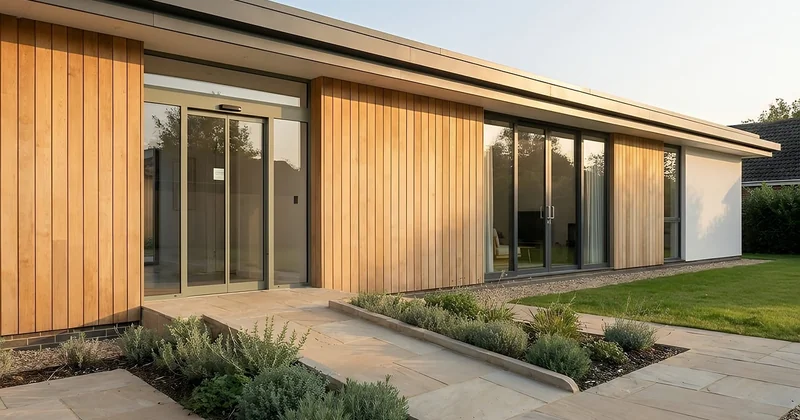
Design that works with the site—elevated walkways instead of cleared paths, buildings that follow the terrain, roofs angled for passive cooling—usually signals an operator who thought about impact from the beginning. A property that flattened a hillside to plant a uniform lawn of imported grass is telling you something else.
Materials matter too, but with a caveat. Bamboo, rammed earth, and reclaimed timber are great when they're sourced locally. When they're shipped across an ocean, the embodied carbon can wipe out the benefit. I've seen "sustainable" villas built from teak imported from three countries away, and the math doesn't work.
The most convincing design feature I've encountered was boring: a lodge in Portugal that had oriented every building to capture prevailing winds and shade itself through the hottest hours, cutting its cooling demand to almost nothing. No gadgetry. Just planning.
Does any of this actually add up?
Here's the uncomfortable part. One long-haul flight can outweigh the emissions savings of a month of eco-conscious hotel stays. That's just arithmetic.
Does that make sustainable hospitality pointless? No. But it reframes what you're buying. You're not offsetting your trip. You're choosing a property that treats its local environment and community as stakeholders rather than resources—and in regions where tourism is the dominant industry, that choice has consequences that outlast your visit.
The last eco-lodge I stayed at had a manager who'd grown up in the village next door. He told me the property employed 34 people, most of them neighbors, and that the water treatment system had become a template the local government was considering for the wider area. That's a small thing in the global picture. It's also the only version of tourism I've seen that leaves a place better than it found it.
So the next time you're looking at a booking page with a fern-covered lobby and a "100% eco" badge, ask the four questions. Check the certification. Read the non-answer. You'll book fewer properties—and the ones you do book will be worth the trip.