Traditional crafts and artisan markets: where the hands still matter
You know the stall. The one where the smell of hot beeswax reaches you before you even see the table. The vendor is bent over a strip of leather, stitching with two needles at once, and doesn't look up when you stop. That's the moment you realize you're not in a gift shop. You're in the middle of a craft that outlived three generations of buyers. That's what a real artisan market gives you, and it's why I keep coming back to the same handful of them every year instead of chasing whatever pop-up is trending on my feed.
The keyword here is traditional. Not "handmade-ish." Not "locally sourced vibes." Traditional means a technique someone learned from a person, who learned it from a person, and the object in front of you carries the marks of that chain. Once you know how to spot that, most weekend markets suddenly look very different.
Key takeaways
- Traditional crafts are defined by technique and transmission, not by the word "handmade" on a sign.
- Permanent markets and pop-up artisan markets serve completely different purposes. Know which one you're walking into.
- You can spot genuine handwork in about 30 seconds by asking two specific questions.
- Prices at craft markets are rarely negotiable, and asking the wrong way costs you the vendor's goodwill.
- Outside the US, the strongest traditional craft markets cluster around guild towns and historic trade routes.
What makes a market traditional in the first place
Three years ago I stood in a ceramics stall in a small town in southern Spain and watched a man refuse to sell me a bowl. He said the glaze hadn't cured. I came back the next morning, and it was gone. Someone else had bought it overnight.
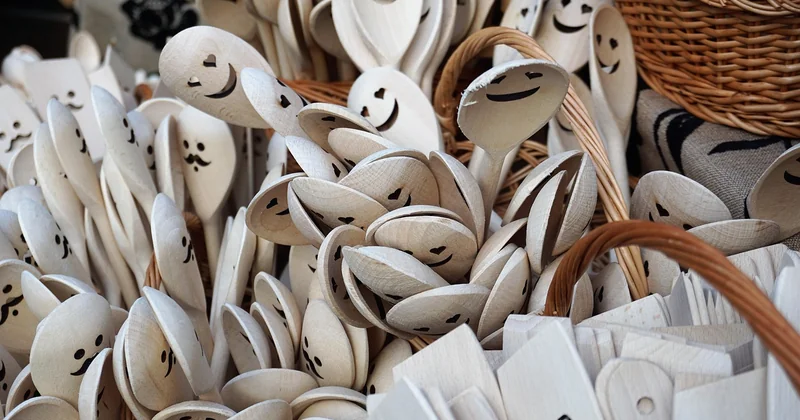
That refusal is the whole thing. A traditional craft market is built on process constraints. The potter can only fire so many pieces. The weaver needs six weeks for one rug. The blacksmith's forge only runs when the weather allows. Scarcity isn't a marketing decision. It's a physical fact.
Compare that with a general "artisan market" that rents tables to anyone with a card reader. Nothing wrong with those. But they're a different animal. Here's how I sort them out in my head:
- Traditional craft market: the vendor usually makes the object, or belongs to a family that does. Techniques are regional. Inventory is thin and uneven.
- Artisan pop-up: curated by an organizer, rotating vendors, heavy on soaps, candles and printed tote bags. Great for gifts, weak on heritage.
- Farmers + makers hybrid: food anchors the foot traffic, crafts fill the gaps. Often the friendliest entry point if you're new to this.
- Guild or cooperative market: run by the makers themselves. Almost always the most authentic, and almost never well advertised.
The word "traditional" also shifts by geography. In the US, a traditional market often means a revival market — somebody re-teaching blacksmithing or chair caning that nearly died out. In Europe, it usually means continuity: the same square, the same families, a charter that's centuries old. Both are worth your Saturday. They are not the same experience.
The permanent vs pop-up question
Permanent markets, like the covered halls of Barcelona or the sprawling public markets of the Pacific Northwest, are open most of the year and mix crafts with food, flowers and everyday shopping. You can visit on a Tuesday. There's no urgency, no queue at the gate, and the craft stalls sit among fishmongers and produce.
Pop-ups invert all of that. They appear for a day or a weekend, they're heavily promoted on social media, and the entire crowd arrives within the first two hours. If you want the good stuff, show up in the first 45 minutes or accept the leftovers.
Which brings up an obvious problem. How do you actually tell whether the thing you're holding was made by the person selling it?
How to tell real handwork from resale
I'll admit I got this wrong for years. I bought a "hand-carved" bowl at a street fair once that turned out to be one of forty identical bowls in a wholesale catalog. It cost me 40 dollars. The lesson cost me more than that, because I'd told three people it was handmade.
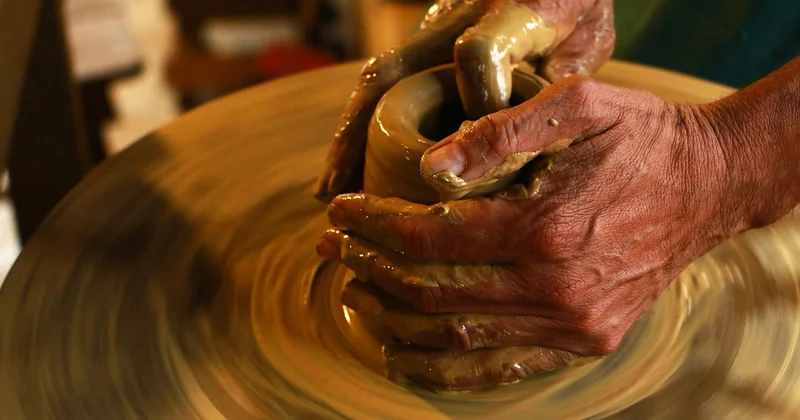
Since then I've used a short routine. It takes about half a minute and it has never failed me.
- Ask what the piece is made from. A real maker answers in material terms — species of wood, type of clay, breed of sheep. A reseller answers in adjectives.
- Ask how long it took. Vague answers ("a while") are a yellow flag. Specific answers ("about nine hours over three evenings") are a green one.
- Look at the back, the bottom, the inside seam. Handwork is imperfect in consistent ways. Machine production is imperfect in random ways.
- Ask if they teach. Makers who teach are almost always makers.
None of this requires you to interrogate anyone. Two questions, casually dropped while you're already holding the object, tell you nearly everything.
Pricing and the haggling question
Traditional craft markets are not bazaars, and the vendor is usually the person who made the item. That changes the etiquette entirely. In most of Europe and North America, prices are fixed. In parts of North Africa, the Middle East, and across much of Latin America and South Asia, some negotiation is expected — but only on higher-ticket items, and only with a light touch.
My rule: I don't negotiate on anything under roughly 50 dollars. On a large piece, I'll ask once, politely, whether there's any flexibility. If the answer is no, I buy it or I walk. I never push twice. Vendors remember faces, and I've had makers show me pieces they keep under the table for returning customers. That's worth more than the ten dollars I might have saved.
| Market type | Typical cadence | Entry cost | Best time to arrive | What you'll find |
|---|---|---|---|---|
| Permanent covered market | Open most of the year, several days a week | Free | Weekday mornings | Mixed crafts, food, household goods |
| Guild or cooperative market | Weekly or monthly | Free to low | Opening hour | Deep craft specialization, thin inventory |
| Seasonal artisan pop-up | One weekend, quarterly or annual | Often free, sometimes ticketed | First 45 minutes | Curated gifts, soaps, prints, jewelry |
| Heritage craft fair | Annual, tied to a festival or harvest | Ticket common | Morning of day one | Demonstrations, live work, regional techniques |
Traditional crafts and artisan markets near you
Searching for artisan markets near you usually returns the same handful of results: a rotating list of weekend events, a couple of city-specific names, and a lot of noise. The trick is knowing which of those results actually leads to traditional craft.
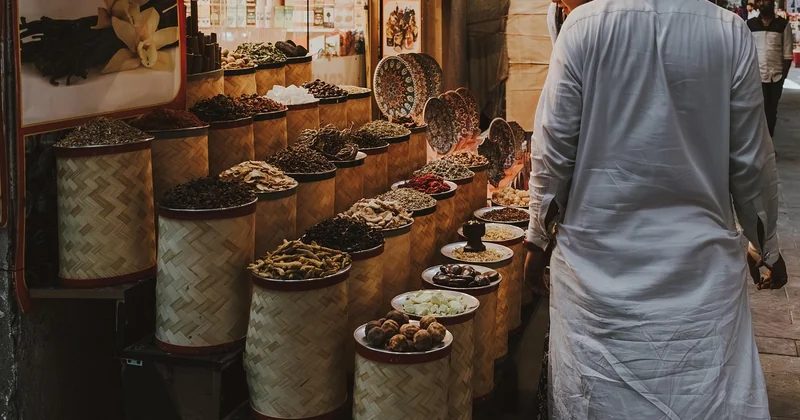
Chicago and the Midwest
Chicago's craft scene leans hard on the maker-to-market pipeline. The Merchandise Mart hosts large-scale maker markets that draw vendors from across the region, and neighborhood-level markets, particularly in Ravenswood, run seasonal and weekend editions that mix vintage dealers with working artisans. Naperville and the surrounding suburbs add smaller, family-oriented events, often tied to a festival calendar.
What I've found useful in this region: the neighborhood markets beat the big halls on authenticity, and the big halls beat them on selection. Go to Ravenswood-type events for one-of-a-kind pieces from someone who lives nearby. Go to the large Mart-style markets when you want to compare fifteen potters in one afternoon.
Denver and the mountain West
Denver's artisan markets have a distinctly regional flavor — leather, metal, wool, and a strong streak of Indigenous and Hispanic craft traditions that you won't find anywhere else in the country. Summer and fall weekends fill up fast, and the city runs market programming through much of the year. If you're chasing traditional technique specifically rather than general handmade goods, look for the smaller events attached to cultural festivals. That's where the demonstrators are.
Looking outside the United States
This is where the traditional side of the keyword really lives, and it's the part most lists skip entirely.
- Oaxaca, Mexico: textile and alebrijes markets where families have worked the same techniques for generations.
- Kyoto, Japan: monthly craft markets in temple grounds, heavy on ceramics, knives and textiles.
- Marrakech, Morocco: the souks are permanent and enormous, but individual guilds still produce the metalwork, leather and rugs on site.
- Kraków, Poland: folk craft fairs tied to seasonal and religious calendars, with carving and lacework that survived the twentieth century intact.
- Oaxaca-adjacent Guatemala: highland weaving cooperatives where the backstrap loom is still the primary tool.
If I had to pick one and only one, I'd send you to a guild-run market over any famous tourist one. The inventory is smaller. The prices are honest. And the person behind the table will talk to you for twenty minutes about why the dye behaves the way it does.
Planning a visit that actually works
Most people plan artisan market visits the way they plan a museum trip, and it backfires. A market is not a collection. It's a live event with a rhythm, and the rhythm is unforgiving.
Here's what I do now, after too many wasted afternoons:
- Check the cadence first. Weekly, monthly, or annual changes everything. An annual fair is worth rearranging your weekend for. A weekly one is not.
- Arrive early, leave late. Vendors restock the good stuff in the morning and drop prices on the remainder near closing. Midday is the worst of both.
- Bring cash. Many smaller vendors still work cash-first, and card readers fail in open-air settings more often than you'd think.
- Ask before photographing. Not because anyone will yell at you, but because makers often have a story attached to a specific piece and they'll tell it if you ask.
- Buy one thing you'll actually use. The keepsake you never touch is the one that ends up in a drawer.
How much should you expect to spend?
Depends entirely on what you're buying, but here are the ranges I've seen repeatedly. Small hand-thrown ceramics: 15 to 45 dollars. Hand-woven textiles: 60 to several hundred, depending on size and fiber. Hand-forged metal tools or knives: 80 and up. Carved wooden objects: 30 to 200. Anything made with a technique that's genuinely rare will sit at the top of its range and stay there.
What you're paying for is real. Time, skill, material, and the fact that no one else has this exact object.
Why this matters more than it sounds
The best explanation I've ever heard came from a basket weaver in her sixties. She told me she wasn't selling baskets. She was buying herself another year of doing the thing her grandmother taught her. That's the transaction, underneath the transaction.
Which means every purchase at a traditional market is a small vote. Not for "supporting local" as a slogan, but for a specific technique staying alive for one more season. Buy the bowl. Ask the question. Show up at 9 a.m. before the crowd does. And when a maker tells you the glaze isn't cured yet, come back the next morning. It'll still be there. That's the point.