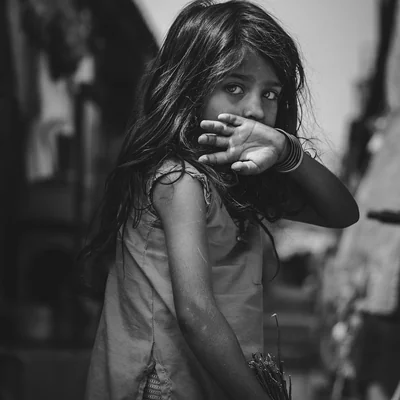
The first time I stood in the courtyard of the Kiyomizu-dera temple in Kyoto, a woman next to me burst into tears. Not soft, dignified tears. Real ones. She wasn't praying, wasn't chanting — just standing there, looking at the wooden stage jutting out over the hillside, overwhelmed by something I couldn't see. I remember thinking: this happens everywhere. At Lourdes. At the Western Wall. On the ghats in Varanasi. Some places carry a weight that has nothing to do with architecture and everything to do with what millions of people have projected onto them over centuries.
That's what makes sacred sites and spiritual journeys such a strange topic to write about honestly. The internet is full of lists. Ten places. Twenty places. Ranked by "vibrational energy" or some other metric nobody can verify. What's missing is the practical, human texture: which sites are actually open to you (depending on what you believe), what a real pilgrimage costs, and why some journeys transform people while others just produce a lot of photos.
So let's skip the rankings and talk about what actually happens when you go.
Key Takeaways
- Sacred sites fall into two very different categories: prescribed pilgrimages (Hajj, Camino de Santiago) with fixed rules, and open spiritual sites you can visit on your own terms.
- Access rules vary enormously — some sites bar non-believers entirely, others require specific dress, and a few have quietly restricted visitor numbers in recent years.
- The most transformative journeys I've observed share one trait: a physical challenge (walking, altitude, heat) that forces you out of tourist mode.
- Overtourism is now a real problem at several major sites. Going respectfully isn't optional anymore — it's part of the deal.
- You don't need a religious framework to have a genuine experience, but you do need to understand the framework of the place you're entering.
- Budget ranges from roughly nothing (a local shrine) to several thousand euros (a guided multi-week pilgrimage).
What actually makes a place sacred (it's not the building)
Here's the thing nobody tells you: the buildings are usually the newest layer. Under almost every major sacred site, there's an older one. And under that, often, something older still.
Take the Western Wall in Jerusalem. What you see today is a retaining wall — a fragment of the Second Temple complex, destroyed in 70 CE. But the sanctity of that spot goes back further, and the same city block holds layers of Jewish, Christian, and Islamic tradition stacked on top of each other. The Dome of the Rock sits roughly where the Temple stood. The Church of the Holy Sepulchre is a ten-minute walk away. You can cross three religions and two thousand years in an afternoon.
This pattern repeats everywhere. A spring becomes a healing site. A healing site becomes a shrine. A shrine becomes a temple. A temple becomes a cathedral. The why never changes — it's always water, a view, a death, or a vision — but the what keeps getting rebuilt.
The three engines of sacrality
After visiting enough of these places, I started noticing that almost all of them run on one of three engines:
- Geography. Mountains, springs, caves, river confluences. Places where the terrain itself does something unusual — Croagh Patrick in Ireland, Mount Kailash in Tibet, the Ganges at Varanasi.
- Events. A death, a miracle, a revelation, a battle. Lourdes, Fatima, Bodh Gaya, Mecca.
- Practice. Centuries of continuous ritual that have saturated a place with meaning. The Camino de Santiago works less because of the cathedral at the end and more because of the thousand years of footsteps before yours.
Most major sites combine at least two. Very few have only one — and those tend to feel thinner when you arrive, even if you can't articulate why.
What are the 10 most spiritual places in the world?
Any list like this is inherently subjective, and I'd be suspicious of anyone who presents it as settled fact. But if I had to name the sites that consistently produce the strongest reactions in the travelers I've spoken to, this is roughly where I'd land — with the caveat that the "top" depends entirely on what you're looking for.
| Site | Location | Access | Best for |
|---|---|---|---|
| Western Wall & Old City | Jerusalem | Open, modest dress | Layered history, intensity |
| Mecca (Hajj/Umrah) | Saudi Arabia | Muslims only, permit required | Prescribed pilgrimage |
| Bodh Gaya | Bihar, India | Open, meditation permits | Buddhist practice |
| Varanasi ghats | Uttar Pradesh, India | Open | Death, ritual, river |
| Camino de Santiago | Spain (multiple routes) | Open, walking route | Physical pilgrimage |
| Kiyomizu-dera | Kyoto, Japan | Open, entry fee | Quiet atmosphere |
| Lake Titicaca shrines | Peru/Bolivia | Open, altitude acclimatization needed | Indigenous cosmology |
| Uluru | Northern Territory, Australia | Open, climb closed | Aboriginal sacred landscape |
| Croagh Patrick | County Mayo, Ireland | Open, pilgrimage days | Barefoot climb, Penitential |
| Mount Athos | Greece | Men only, permit required | Monastic isolation |
Two things stand out from that table. First, three of the ten require special permission or restrict access entirely — Mecca to Muslims, Mount Athos to men, and several others to ticketed or timed entry. Second, the experiences are not equivalent. Walking the Camino for a month is a completely different category of undertaking than spending two hours at Kiyomizu-dera.
Anyone who lists them as equal is selling you something.
What are some spiritual sites around the world?
Beyond the headline sites, there's a whole second tier that rarely makes the lists — and honestly, some of them hit harder because you're not fighting crowds.
Europe
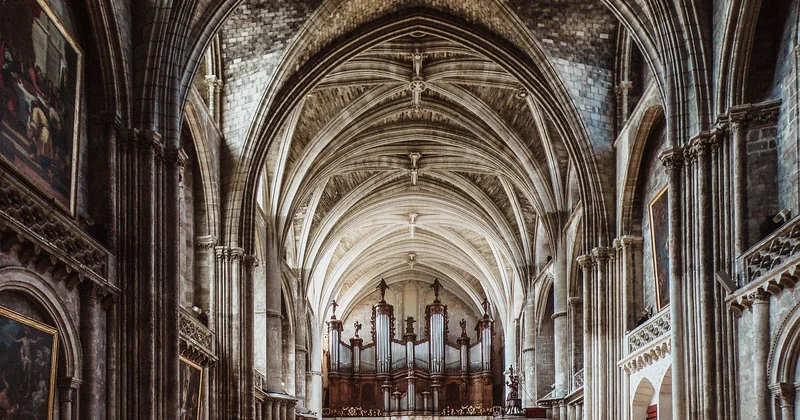
Chartres Cathedral in France. The rock churches of Lalibela in Ethiopia (technically Africa, but often grouped with the European pilgrimage circuit). The monastery of Montserrat outside Barcelona. I once spent a night at a small Benedictine abbey in Bavaria where the guesthouse had no wifi and dinner was silent. It cost me €28 for the night including two meals. That was more spiritually useful to me than any cathedral I've visited.
United States
Sedona, Arizona, gets most of the attention — the red rock formations, the vortex claims, the crystal shops. It's real, but the commercial layer is thick. If you want something with less noise, look at the Chimayo chapel in New Mexico, or the Hawaiian heiau sites on the Big Island, or honestly, any of the small Catholic missions along the California coast that nobody visits outside of Instagram.
Asia and the Middle East
The Kumbh Mela in India is the largest gathering of humans on earth — tens of millions of pilgrims at the confluence of the Ganges and Yamuna rivers. It happens on a rotating cycle, so timing matters. In Japan, the 88-temple pilgrimage on Shikoku is the quiet cousin of the Camino: 1,200 kilometers of walking, mostly through rural areas, with a strong tradition of local people giving pilgrims gifts along the way.
What are some examples of spiritual journeys?
This is where I want to draw a hard line that most articles blur.
A pilgrimage is prescribed. There are rules. The Hajj has a fixed sequence of rites performed over five days in a specific month of the Islamic calendar. The Camino has a defined route and a Compostela certificate at the end that requires you to walk at least the last 100 kilometers (or cycle 200). Mount Athos requires an application and often a wait of months.
A spiritual journey is personal. There's no certification, no fixed route, no external validation. You decide what counts.
Both are legitimate. But they produce very different experiences, and confusing them leads to disappointment. I've met people who started the Camino expecting a personal spiritual retreat and were blindsided by the physical grind, the snoring in the albergues, and the fact that half the people around them were there for the cheap hiking holiday. The ones who'd read up on the actual tradition fared much better.
Three real examples, with actual numbers
- The Camino Francés. Roughly 780 km from Saint-Jean-Pied-de-Port to Santiago. Most people take 30 to 35 days. Budget €25 to €40 per day if you stay in municipal albergues and cook some meals.
- The Shikoku 88. 1,200 km, usually 40 to 60 days on foot. Costs are higher than the Camino — around €50 per day if you stay in the small family-run lodges. Difficulty is real: I know a man who abandoned it twice before finishing.
- Umrah (the lesser pilgrimage). Can be done in a few days, unlike the Hajj. Costs vary widely by point of origin — from a few hundred euros for regional travelers to several thousand from further away, not counting the permit system.
Where are the best places to travel for spiritual awakening?
Honest answer: the place matters less than the conditions you create around it. I've had more clarity on a two-day walk in the Scottish Highlands than in some of the famous sites, because the conditions were right.
That said, some destinations are genuinely better set up for it than others. What makes them work isn't the energy — it's the structure.
What actually helps
- A physical challenge that takes at least three days. One-day visits rarely shift anything.
- Removal from your normal environment — no work email, no familiar food, ideally a language you don't speak.
- A framework you can participate in, even as an outsider. Morning prayers at a monastery. A meditation schedule at a Bodh Gaya center. The rhythm of a route.
- Other pilgrims. This is the part that surprises people. The conversations on the Camino or the Shikoku trail do more work than the silence.
What doesn't
Wellness retreats that promise transformation in a weekend for €3,000. Vortex tours in Sedona. Anything sold with the word "awakening" in the brochure, frankly. The commercial packaging of spiritual experience is one of the more cynical developments of the last two decades, and it produces the same hollow result every time.
Overtourism at sacred sites — and why it matters
This is the angle almost every article on this topic skips, and it's the one I care most about.
Several major sites are under real pressure. Parts of the Camino have seen water sources and village infrastructure strained beyond capacity during peak months. Bodh Gaya's local community has mixed feelings about the pilgrimage economy — some benefit, many don't. The Old City of Jerusalem has seen increasing controls on movement that affect residents far more than tourists.
Here's the practical part: you can visit almost any sacred site without being part of the problem, but it takes a bit of intention.
- Go outside peak season. The Camino in late autumn is a completely different experience.
- Spend money locally — small guesthouses, family restaurants, local guides. Not international chains.
- Dress and behave to the standard of the site, not your comfort. If you're not sure what that means, watch what locals do for ten minutes before you do anything.
- Ask before photographing people in prayer. This is not a Japanese or Indian or Middle Eastern rule — it's a basic one everywhere.
- If a site is closed to you because of your religion or gender, accept that. The exclusion isn't there to insult you.
I once watched a tour group walk through the Church of the Holy Sepulchre in shorts and loud conversation, phones at arm's length filming. An elderly Greek Orthodox priest just stood there, watching them pass, saying nothing. That image has stayed with me longer than the building.
How to actually plan one of these trips
Whether you're doing a full pilgrimage or a two-day visit, the mechanics are similar.
Do I need to book in advance?
For pilgrim routes in peak season — yes, weeks or months ahead for the Camino in summer. For most open sacred sites, no. For Mount Athos, apply many months in advance. For Hajj, the permit system is highly regulated and involves a lottery in many countries.
What's a realistic budget?
A bare-bones pilgrimage like the Camino can be done for under €1,000 all-in for a month if you're disciplined. A guided spiritual tour will run €3,000 to €6,000 for two weeks. Local day visits to most sites are under €20 in entry fees or free.
Can I go if I'm not religious?
At most sites, yes — often the majority of visitors aren't. At a few (Mecca most notably, Mount Athos for gender reasons), no. Check the specific rules for the specific place before booking anything.
What if I don't feel anything when I arrive?
This is more common than people admit. The expectation of transcendence is itself a barrier. Some of the people who get the most out of a pilgrimage feel nothing at the destination and everything on the third day of walking. Give it time, and stop checking whether it's "working."
The part that stays with you
Sacred sites don't transform anyone by themselves. I've seen tourists walk through Varanasi and come out complaining about the smell. I've seen people kneel at Lourdes and get up unchanged. The place is a container. What you bring to it, and how long you're willing to stay inside the container, determines what comes out.
If I were to give one piece of advice — and I've earned the right to give it after enough failed attempts — it would be this: pick a journey that takes you at least a week on foot, learn three or four sentences of the local language before you go, and leave the camera in the bag for the first two days. Whatever happens after that is between you and the place.
And if you do find yourself standing somewhere and crying for no reason you can explain — that's normal. The woman at Kiyomizu-dera knew something I didn't yet. A few years later, I finally understood what it was.